

Betting on the House
The Beautiful Risk of Doing Business Your Way.

Place Your Bets, Ladies and Gentlemen
I’ve been contemplating a rather interesting wager.
No, I’m not planning to spend the evening in Las Vegas.
Although the thought of a beautifully tailored suit, a glass of whiskey and a little questionable judgment does have its appeal.
This particular wager is considerably more personal.
I’m betting on myself.
Now, before you mistake that statement for an inspirational quote destined to appear on a coffee mug, allow me to explain.
For years, I’ve been in the business of helping other businesses establish their digital identities.
I’ve encouraged them to differentiate themselves.
To communicate their value.
To become memorable.
To give potential customers a compelling reason to choose them over someone else.
Perfectly reasonable advice.
There was, however, one rather inconvenient little detail.
I wasn’t always following it myself.

The Comfortable Art of Playing It Safe
There’s something wonderfully reassuring about doing what everybody else is doing.
Nobody questions your approach.
Nobody finds your ideas particularly unusual.
Nobody wonders whether you’ve temporarily misplaced your professional judgment.
You simply observe what appears to be working for others and create your own respectable version of it.
The familiar website.
The familiar advertisement.
The familiar social media post.
The familiar collection of business advice presented in a familiar professional tone.
Everything looks appropriate.
Everything sounds reasonable.
And everything gradually becomes rather difficult to distinguish from everything else.
I know this particular game.
I’ve played it.
And for a while, I mistook familiarity for strategy.
But somewhere along the way, I began asking myself an uncomfortable question.
If I’m encouraging my clients to stand out, why am I so comfortable blending in?

The Artist Who Wasn’t Invited
Something rather curious began happening outside my business.
I discovered how much I enjoyed writing poetry.
I began exploring the theatrical possibilities of public speaking.
Even my weekly networking commercials became opportunities to experiment with storytelling, humor and the occasional unexpected revelation.
I was having fun.
Considerably more fun than I was having creating conventional marketing content for my own company.
For some reason, I had convinced myself that business communication required a different version of me.
A more predictable version.
A more restrained version.
Perhaps even a slightly less interesting version.
The artist was welcome in my personal life.
The storyteller was welcome on stage.
The entrepreneur was welcome in the office.
But apparently, nobody had introduced them to one another.
How wonderfully inefficient.
Then came a rather liberating realization.
Perhaps I didn’t dislike marketing.
Perhaps I simply disliked the way I had been marketing.
The Most Expensive Bet You Never Realized You Were Making
Business owners frequently associate risk with doing something different.
Introducing an unconventional product.
Changing a brand identity.
Experimenting with a new marketing strategy.
Investing in an unfamiliar technology.
And those decisions can certainly involve risk.
But there’s another wager that rarely receives the same attention.
The decision to remain exactly as you are.
Imagine a business operating in an increasingly competitive market.
Its competitors are improving their websites.
They’re exploring new ways to communicate.
They’re creating better customer experiences.
They’re discovering opportunities to become more efficient, more visible and more memorable.
Meanwhile, our fictional business owner is doing precisely what worked five years ago.
Why?
Because it worked five years ago.
There’s a certain comfort in that reasoning.
Unfortunately, the market hasn’t agreed to remain five years younger.
Customer expectations evolve.
Technology evolves.
Competitors evolve.
And what once represented a competitive advantage may gradually become an ordinary expectation.
Doing nothing may feel safe.
But it isn’t necessarily without consequences.
Standing still is also a strategic decision.
The difference is that we rarely calculate its potential cost.
The Difference Between Courage and Recklessness
Now, allow me to make an important distinction.
Betting on yourself doesn’t mean gambling irresponsibly with your business.
It doesn’t mean abandoning a profitable strategy simply because you’re bored.
It doesn’t mean investing money you cannot afford to lose.
And it certainly doesn’t mean ignoring evidence because you’re emotionally attached to an idea.
That isn’t courage.
That’s an expensive collection of questionable decisions wearing a rather attractive suit.
A calculated risk begins with understanding what you’re trying to accomplish.
What opportunity are you pursuing?
What assumptions are you making?
What resources are you prepared to invest?
How will you determine whether the experiment is working?
What happens if it doesn’t?
Creativity and discipline are not enemies.
Some of the most interesting business decisions emerge when the two are allowed to work together.
The artist imagines what might be possible.
The strategist determines whether it’s worth pursuing.
And the entrepreneur decides whether to place the bet.
What Are You Actually Bringing to the Table?
Imagine sitting at a beautifully illuminated casino table.
Before you lies a collection of chips.
Each represents something your business possesses.
- Your experience.
- Your knowledge.
- Your craftsmanship.
- Your reputation.
- Your personality.
- Your relationships.
- Your ability to solve problems in ways that others might not have considered.
These are your assets.
And yet, when many businesses introduce themselves online, they communicate remarkably little about what makes those assets valuable.
Instead, we encounter the familiar assurances.
Exceptional service.
Competitive pricing.
Years of experience.
Commitment to excellence.
Perfectly respectable statements.
But where is the personality?
Where is the evidence?
Where is the perspective that belongs uniquely to that business?
What would make someone remember the experience of discovering you?
Your competitive advantage may not require inventing something extraordinary.
It may require revealing something extraordinary that already exists.
Something you’ve become so accustomed to possessing that you’ve forgotten its value.

The Four Chips of a Calculated Risk
Before pursuing a new business or marketing initiative, I’d encourage you to examine four things.
01. The Opportunity
What could this decision accomplish?
02. The Investment
What will the experiment require?
03. The Evidence
How will success be measured?
04. The Adjustment
What will you do with what you learn?
01. The Opportunity
What could this decision accomplish for your business?
More qualified leads?
Increased sales?
Reduced operating costs?
Stronger customer relationships?
A more recognizable brand?
Define the opportunity before becoming enchanted by the idea itself.
An interesting idea becomes considerably more valuable when it serves a meaningful objective.
02. The Investment
What will the experiment require?
Money.
Time.
Attention.
Training.
Technology.
Perhaps a little emotional discomfort.
Understand what you’re prepared to invest, and establish reasonable limits.
Not every opportunity deserves an unlimited commitment.
03. The Evidence
How will you know whether the experiment is producing something worthwhile?
Determine what success might look like before you begin.
Depending on the initiative, that might involve measuring inquiries, sales, engagement, customer feedback, time saved or improvements in operational efficiency.
Choose measurements that relate to your actual objective.
Don’t mistake applause for profitability.
Although applause can be rather enjoyable.
04. The Adjustment
What will you do with what you learn?
Perhaps the experiment succeeds.
Perhaps it requires refinement.
Perhaps it reveals an opportunity you hadn’t anticipated.
Perhaps it fails.
A thoughtful experiment should leave you with useful information, even when the outcome differs from your expectations.
The objective isn’t to prove that your original idea was brilliant.
The objective is to discover what works.
Even when the discovery requires admitting that you were wonderfully mistaken.
A Little Experiment With the Odds
Consider a fictional business evaluating a new marketing initiative.
It decides to invest $2,000 in a carefully defined experiment.
Each additional customer generated by the initiative contributes approximately $500 after the direct costs of serving that customer.
Under those assumptions, the business would need four additional customers to recover its initial investment.
Five additional customers would produce a positive contribution beyond that investment.
Two additional customers would leave it short of recovering the initial cost.
Below Break-Even
2 additional customers.
$1,000 total contribution.
-$1,000 after investment.
Break-Even
4 additional customers.
$2,000 total contribution.
$0 after investment.
Above Break-Even
5 additional customers.
$2,500 total contribution.
+$500 after investment.
These are hypothetical figures, of course.
Real businesses have different expenses, margins, customer acquisition timelines and operational considerations.
But the exercise illustrates something important.
A creative idea becomes easier to evaluate when we understand the financial circumstances surrounding it.
Rather than asking whether an idea sounds exciting, we can begin asking what would need to happen for the investment to make business sense.
The numbers don’t eliminate uncertainty.
They simply help us understand the wager.
And uncertainty becomes considerably less intimidating when we know what we’re risking.
The Calculated Wager
Understand the investment before placing your bet.
- Minimum customers needed
- 4
- Total customer contribution
- $3,000
- Contribution after investment
- $1,000
Positive contribution after investment.
6 additional customers. Each chip represents one customer.
Illustrative estimates, not financial forecasts. Contribution per customer means revenue minus the direct costs of serving that customer. Other expenses, timing and uncertainty may affect actual results.
The Business of Being Remembered
There’s something I’ve come to appreciate about creativity.
It isn’t always the safest route to universal approval.
An unconventional advertisement may not appeal to everyone.
A distinctive website may not satisfy every personal preference.
A provocative headline may cause someone to raise an eyebrow.
That’s perfectly acceptable.
The objective of a business identity isn’t necessarily to appeal equally to every person who encounters it.
The objective is to communicate something meaningful to the people it intends to serve.
But distinction must have substance.
Being controversial simply to attract attention is not much of a strategy.
Neither is creating something beautiful that accomplishes absolutely nothing.
The creativity should serve the experience.
The experience should serve the customer.
And the customer experience should serve the business.
That’s where artistic expression and commercial purpose become particularly interesting partners.
Why You’re Reading This
You may have noticed that this isn’t a conventional web design article.
There are no ten revolutionary trends guaranteed to transform your business overnight.
No promises of extraordinary results accompanied by an impressive collection of exclamation marks.
No carefully manufactured urgency encouraging you to purchase something before midnight.
Instead, you’ve encountered a story.
Perhaps a slightly unconventional one.
That’s intentional.
Rogue Messages represents an experiment of my own.
An opportunity to combine the things I enjoy with the business I’ve spent years developing.
Storytelling.
Art.
Psychology.
Technology.
Business strategy.
A little humor.
Occasionally, a little romance.
And perhaps an uncomfortable question or two.
I want these articles to offer something worth discovering, whether or not the person reading them ever becomes a client.
Because I believe a business can demonstrate its expertise without constantly announcing it.
It can communicate its personality without abandoning its professionalism.
And it can invite a conversation without making every encounter feel like a sales presentation.
Will everyone appreciate this approach?
Certainly not.
Will every experiment succeed?
Unlikely.
But I’m considerably more interested in discovering what Full Force can become than spending another year imitating what a web agency is supposedly expected to be.
This is my experiment.
And you’re experiencing it.
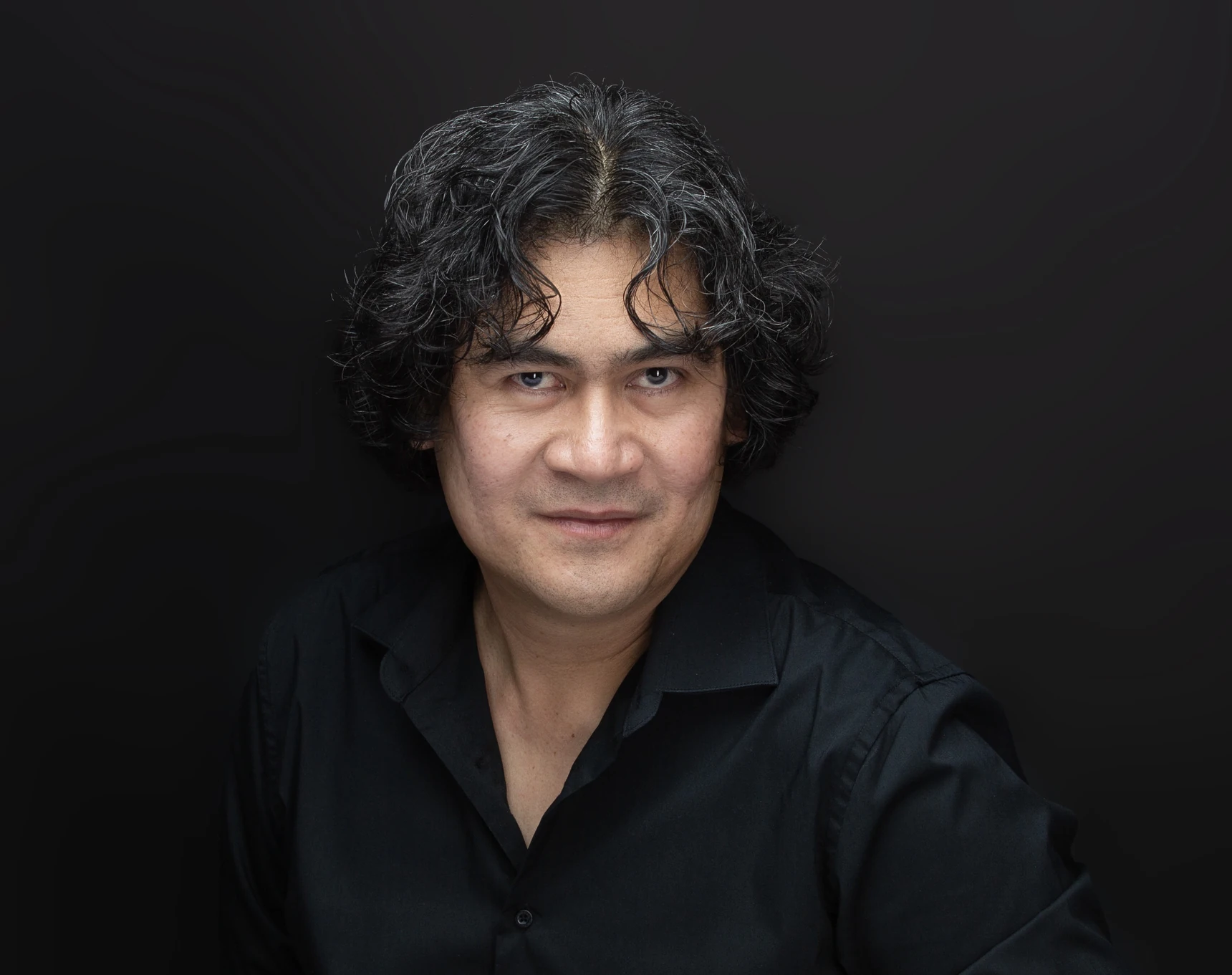

Your Turn at the Table
Tomorrow morning, pour yourself a cup of coffee.
Before opening your email, examining your schedule or attending to the familiar responsibilities of running your business, I’d like you to consider five questions.
1. What am I doing simply because everyone else in my industry is doing it?
Is it genuinely effective, or has it merely become familiar?
2. What makes my business distinctive that I haven’t communicated effectively?
Perhaps there’s an advantage hiding in plain sight.
3. What opportunity have I been postponing because it feels unfamiliar?
Would a small, carefully controlled experiment help me explore it?
4. What would I need to measure to determine whether that experiment is worthwhile?
Establish meaningful expectations rather than relying entirely on enthusiasm.
5. If I were starting my business today, what would I do differently?
That last question can be particularly revealing.
Experience is valuable.
But sometimes, the habits we’ve accumulated alongside that experience prevent us from recognizing possibilities that would otherwise seem obvious.
You don’t need to reinvent your entire business tomorrow.
Choose one meaningful opportunity.
Establish a reasonable investment.
Define what success would look like.
Then give yourself permission to explore.
A small experiment can reveal considerably more than another year of wondering.

The Beautiful Risk of Being Yourself
There comes a moment when you have to decide whether the business you’re building reflects your own vision or merely someone else’s expectations.
I’ve been contemplating that distinction.
And I’ve arrived at a rather simple conclusion.
I’d rather create something I genuinely believe in, evaluate it honestly and learn from the experience than spend my creative life producing respectable imitations.
That doesn’t mean every idea deserves to succeed.
The market will have its opinion.
The evidence will have its opinion.
And I intend to listen to both.
But I also intend to give my own imagination a seat at the table.
For me, Full Force is becoming more than a web agency.
It’s an opportunity to explore what happens when artistic expression, sophisticated technology and meaningful business strategy are allowed to share the same canvas.
Perhaps some of those experiments will surprise us.
Perhaps others will require a little refinement.
That’s part of the adventure.
And if there’s one thing I’d encourage you to take away from this particular Rogue Message, it’s this:
Don’t confuse conformity with security.
Don’t confuse creativity with recklessness.
And don’t underestimate the possibilities hiding within the business you’ve already built.
You may have considerably more to bring to the table than you’ve allowed yourself to imagine.
As for my own wager?
I’ve considered the possibilities.
I’ve accepted the uncertainty.
And I’ve decided where to place my chips.
I’m betting on the house.
So tell me…
What do you wish your website could do that it isn’t doing today?